AI Film Biography
Scenes no camera caught, brought to the screen.
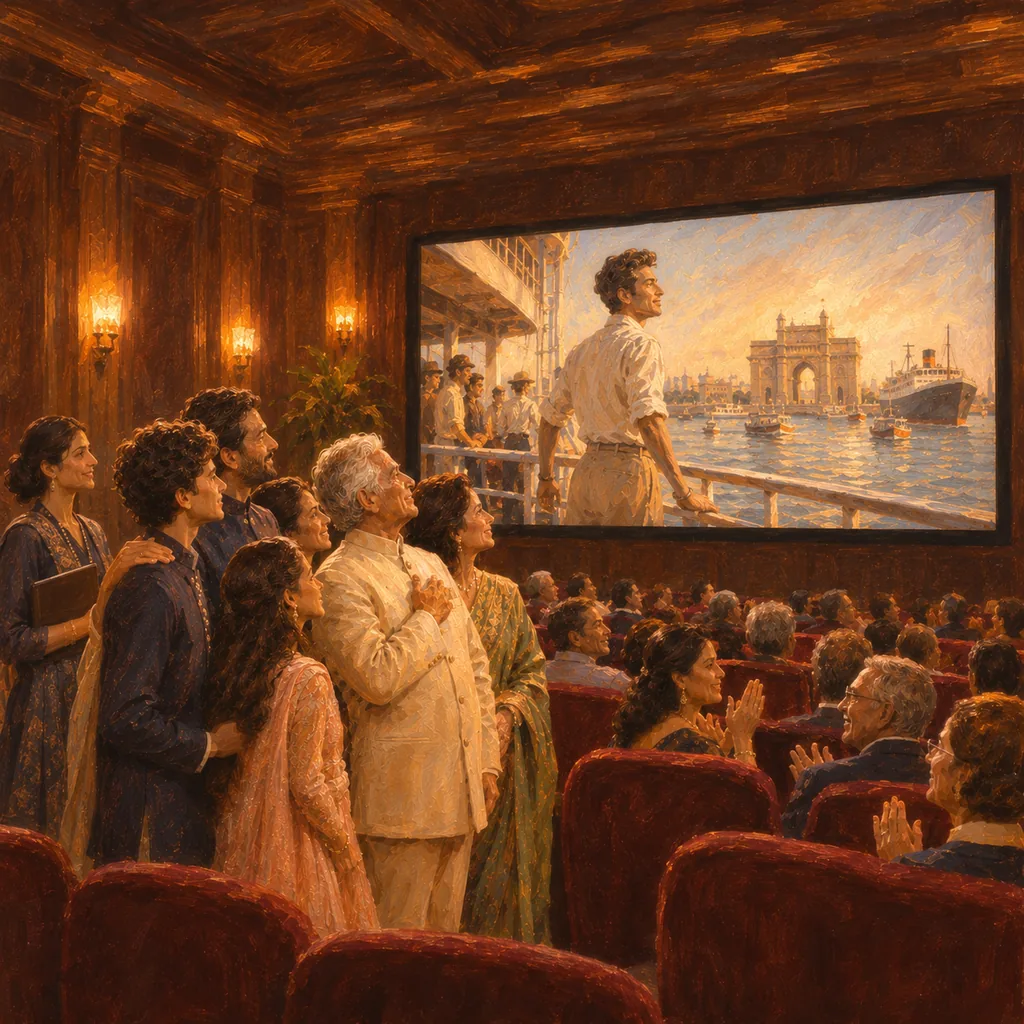
Most lives are lived far from a camera. The lane where a father learnt to ride a bicycle, the ship that carried a young couple to Mombasa, the single room that grew into a company: these survive only in memory and in a few faded prints. A documentary can show what was filmed. An AI Film Biography shows what was remembered.
You share what you hold: photographs, home videos, voice notes, letters, certificates, newspaper cuttings and the recollections of those who were there. Our writers shape it into a script. Our editors and visual artists then use artificial intelligence to recreate the places, the eras and the moments the narrative needs, and weave them together with your own pictures and recordings into a film with narration, music and a clear arc from first scene to last.
When it is the right choice
It suits families who would like a film without filming days, and people who would rather not sit before a camera. It brings back chapters that unfolded decades ago or in another country. It allows a tribute to someone who is no longer living, made from what they left behind. And it can stand by itself, or sit beside a Personal Biography or a Documentary Biography drawn from the same material.
Human insight in every frame
Artificial intelligence is the medium of our age, and Gyaanka uses it with care. What makes the film worth keeping is human insight. Every frame, every sound and every line of narration is researched, considered and shaped by our writers and editors, in close consultation with the person whose life it portrays, whose invaluable inputs guide each choice. The technology renders the scenes; people decide what they show, and why.
The finished film is checked against your facts before you see it, and the credits name every recreated scene, so that no viewer mistakes an imagined moment for archival footage.
How the film is made
- Conversation. We listen, agree the length, the tone and the audience, and list the material you hold.
- Gathering. You share photographs, recordings, documents and memories through your private My Gyaanka space. We sort, restore and catalogue them, and where a memory needs more detail, we hold a short recorded conversation.
- Script and storyboard. Our writer drafts the narration and a storyboard showing, scene by scene, what will be recreated and what will come from your own material.
- Review. The script and storyboard are yours to approve. You decide how each person appears, and whose likeness or voice may be recreated. Nothing is created, released or shared without your written approval, and all material is kept in strict confidence.
- Production. Our editors create the scenes, add narration, music and sound, and show you the film for approval before it is finalised and delivered in the form agreed at the outset.
See the full process Understand the investment
In your language
Narration and titles can be in English, Gujarati, Hindi or Marathi, and subtitles can be added so that relatives in other countries follow every scene.
Questions families ask
Will the film look like real footage?
It looks cinematic, in a visual style agreed with you, from painterly to lifelike. Recreated scenes are always named as such in the credits, and your own photographs and recordings are kept as untouched originals.
Can the faces and voices of family members be recreated?
Only with consent. A living person's likeness or voice is recreated only with that person's written permission, and for someone who has passed away, the family's consent is recorded. A professional narrator can speak in their place.
What if we have very few photographs?
A handful is enough to begin. Places, dates, documents and recollections guide the recreated scenes, and the narration carries the rest.
The first step
We will look at what you hold, show you how the years you describe could appear on screen, and guide you from the first conversation to the first screening.