Documentary Biography
A life you can see and hear, long after the room has emptied.
A photograph holds a moment. A film holds a person: the pause before an answer, the laugh that arrives a little early, the way a hand settles on the arm of a chair. Pages tell a family what happened. A documentary lets them meet the one it happened to.
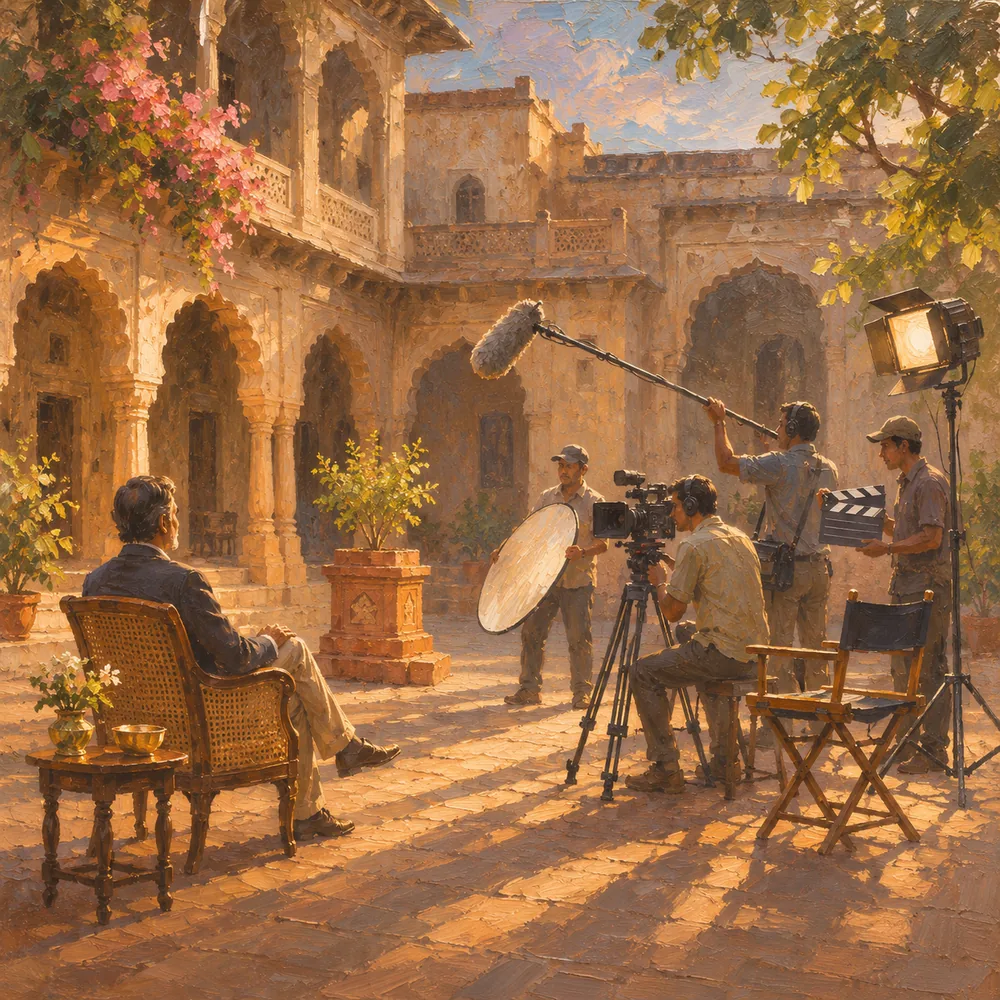
A Gyaanka Documentary Biography is a cinematic film of a single life, researched with the rigour of a book and directed with a documentary maker's eye. The subject speaks in their own voice. Relatives, colleagues and friends add what the subject would never say about themselves. Photographs, letters, records and archival footage are woven in, and a director and editor give the whole a shape, a rhythm and a sound worthy of its subject.
One life, in the form you prefer
The film can stand alone, or sit beside a written biography built from the same research. Many families choose both, so that one generation reads the story and the next watches it. The same material can also become an audiobook, an original album or an heirloom volume.
Who commissions it
Families who want their elders seen and heard by those who come after. Sons and daughters who wish to honour a parent while there is time to ask the questions. Founders and leaders whose manner, humour and conviction are as telling as their achievements. People whose gift is the spoken word, and who are better met than read.
How the film is made
- Conversation. Unhurried recorded interviews, at the place and pace that suit you, with rest whenever you need it.
- Research. Records, archives, letters, photographs and home footage are set beside memory, and each fact is checked.
- Direction. A structure, a narrative voice and a point of view give the years their meaning, so the film plays as cinema and not as a recording.
- Review. Every cut is yours to approve. You may correct it, withhold a passage or reserve any scene for the family alone. Nothing is released, shared or screened without your written approval, and all material is kept in strict confidence.
- Production. Editing, sound, music and finishing are carried out to a high standard, and you see and approve the film before it is finalised. It is delivered in the form agreed with you at the outset, made to be shown, shared and kept.
See the full process Understand the investment
In your language
The film is made in the language you speak most naturally: English, Gujarati, Hindi or Marathi. Where relatives live in other languages, subtitles can be prepared, as agreed at the start, so that no one at the screening is left outside the story.
Questions families ask
Do I need to be at ease in front of a camera?
No. Our directors begin with conversation, and the camera joins it gradually. Sessions are short, and any answer can be given again.
Can a film be made if the person is unwell, or no longer living?
Yes. We work with whatever exists: shorter sessions, conversations with those who knew the person, and photographs, letters and recordings. The result is a faithful portrait, made with the same care as any other commission.
Who will see the film?
Only those you choose. It may be screened for the family alone, shared among friends and associates, or released more widely. The decision and its timing remain yours.
The first step
We will listen to the life you wish to preserve, show you how it could be filmed, and stay beside you through every stage, until you hold a film your family will return to.